Business Development
Rationale for the Research Methodology
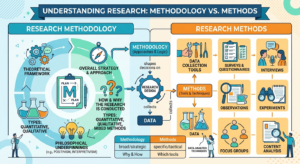
The selection of an appropriate research methodology is fundamental because it provides the philosophical and theoretical foundation that guides the entire research process.

The selection of an appropriate research methodology is fundamental because it provides the philosophical and theoretical foundation that guides the entire research process.
Self-efficacy is widely recognised as a critical determinant of successful learning, professional competence and resilience within work-based learning (WBL), particularly in the UK health and social care sector where apprentices must develop knowledge and skills while working in complex, emotionally demanding and highly regulated environments.
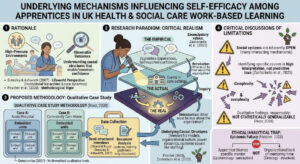
The development of self-efficacy is fundamental to successful work-based learning (WBL), particularly within the UK health and social care sector where apprentices must integrate theoretical knowledge with professional practice in complex, unpredictable and emotionally demanding environments.

In residential childcare, mentoring is inherently relational and emotionally demanding due to the centrality of trauma-informed practice, safeguarding responsibilities and ethical decision-making.

In adult and vocational education, Continuing Professional Development (CPD) is vital for improving teaching quality, inclusion, and meeting complex learner needs.

Inclusive practice is a cornerstone of contemporary education and care policy in the United Kingdom, underpinned by statutory frameworks such as the SEND Code of Practice (Department for Education & Department of Health, 2015) and the Care Act (2014), which mandate equitable access to learning and social participation.